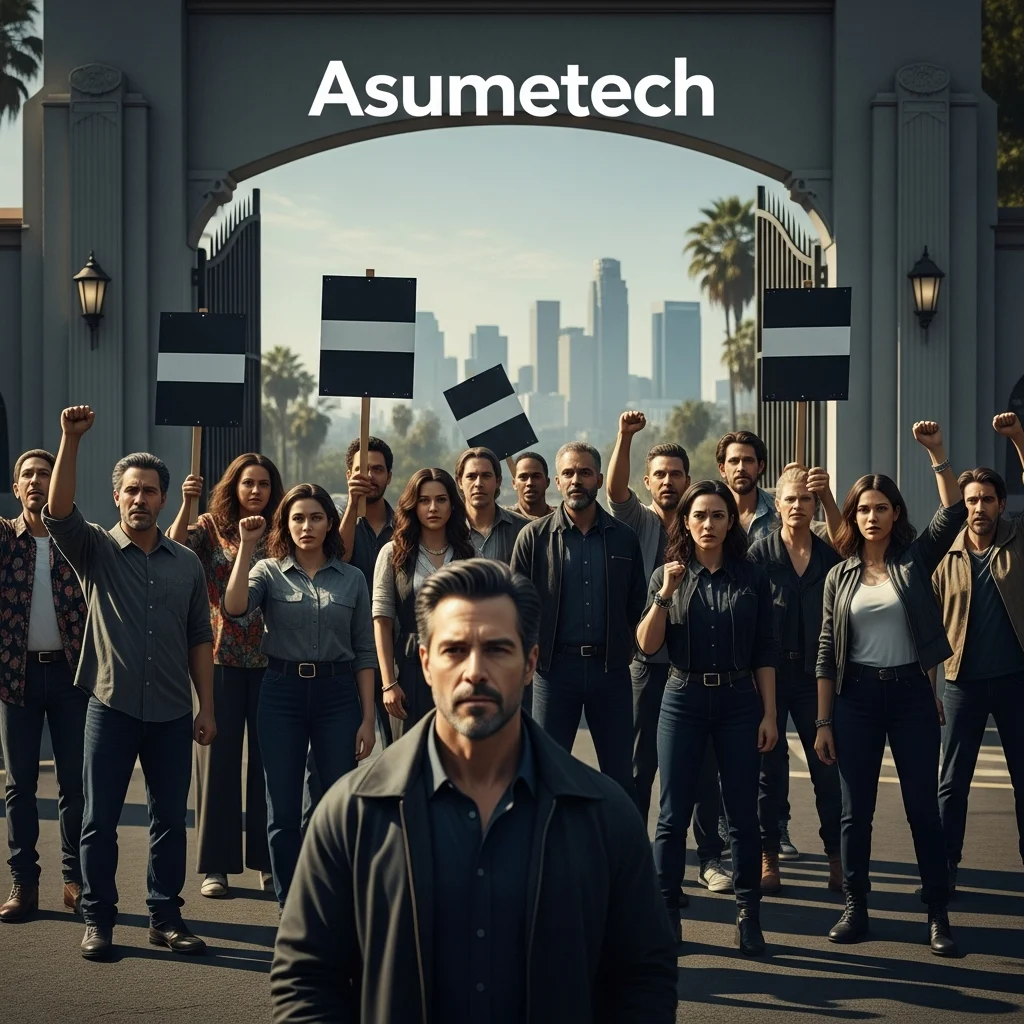
- Synthetic Performer Loopholes: The 2026 negotiations center on “Synthetic Performers”—AI entities not based on specific humans—which SAG-AFTRA argues are being used to circumvent 2023 digital replica protections.
- 2026 Compensation Pivot: Beyond standard residuals, the union is demanding a “Technology Participation Fund” to offset revenue lost to AI-generated content in streaming libraries.
- Legislative Fortification: New California labor laws enacted in 2025 have provided the union with fresh legal leverage regarding “informed consent” for digital cloning.
The neon lights of Hollywood Boulevard are casting longer, colder shadows this August as the entertainment capital of the world braces for a seismic labor disruption. For the second time in three years, the screen is fading to black as SAG-AFTRA, representing over 160,000 performers, moves toward a massive work stoppage. This isn’t just a repeat of history; it is a fight for the biological soul of cinema against an increasingly automated industry.
The 2026 Flashpoint: From Replicas to Synthetic Replacements
While the landmark 2023 strike established protections against “Digital Replicas”—AI versions of existing actors—the 2026 conflict focuses on a more existential threat: the Synthetic Performer. These are entirely AI-generated characters that do not rely on a specific human’s likeness but are trained on the collective performances of the union’s membership.
SAG-AFTRA President Fran Drescher, who has maintained a firm grip on the union’s strategy through the 2024-2026 period, has labeled these synthetic entities as “talent vampires.” The union argues that studios are using these digital constructs to fill background and supporting roles, effectively drying up the entry-level jobs that have long been the lifeblood of the acting profession. Unlike the 2023 vote, which saw a 97.91% strike authorization, the current atmosphere is even more clinical, driven by data-backed evidence of job displacement.
Negotiation Gridlock: The AMPTP vs. Performer Ethics
The Alliance of Motion Picture and Television Producers (AMPTP) maintains that the industry requires “creative flexibility” to remain competitive in a landscape where global content is increasingly decentralized. However, the union’s demands in 2026 have shifted toward the financial plumbing of the industry. The guild is pushing for a new “AI Revenue Share” model, ensuring that if a production uses synthetic performers, a percentage of the savings is redirected into the union’s health and pension funds.
This economic friction comes at a time when the industry is diverging. On one hand, we see the continued dominance of massive, tech-driven theatrical events, such as Imax Q2 2026: The Tech Moat Behind Nolan’s The Odyssey, which rely on star power and premium formats. On the other hand, streaming platforms are tightening budgets, often looking toward automated solutions to manage their backend. Interestingly, even the way these performers are paid is becoming automated; as Natural raises $30M for AI agent payments, the infrastructure for a human-less Hollywood is already being built.
The Comparison: 2023 vs. 2026 Demands
| Issue | 2023 Focus | 2026 Focus |
|---|---|---|
| AI Tech | Digital Likeness Protection | Synthetic Performer Bans/Tax |
| Residuals | Streaming Viewership Metrics | Algorithm-Neutral Compensation |
| Auditions | Self-Tape Regulation | Virtual Environment Standards |
Legislative Shielding and California’s New Guardrails
Unlike the strike of 2023, Hollywood actors now have the backing of specific state-level legislation. Throughout 2025, California enacted several labor laws that strictly define “informed consent” in digital cloning. These laws prevent studios from including “perpetual rights” clauses in standard contracts—a common tactic used to gain AI rights for a one-time fee.
The 2026 contract renewal is the first real test of these laws in a collective bargaining setting. SAG-AFTRA is leveraging these statutes to demand that any use of AI in a production—whether for lip-syncing, aging, or full synthetic generation—be disclosed to the union 48 hours prior to the start of principal photography. The AMPTP has called these demands “administratively impossible,” but with the 2026 production schedule already delayed by global logistical shifts, the union believes they have the upper hand.
“We are not anti-technology,” Drescher stated during a late-night press briefing. “We are anti-exploitation. If the machine can do the job because it was fed our data, then the machine owes the human a living.”
As the midnight deadline looms, the impact is already being felt. Major franchises have paused pre-production, and the prospect of a dark autumn in Los Angeles is becoming a reality. This isn’t just about a paycheck anymore; it’s about ensuring that in the world of storytelling, the human element remains more than just a data point for a generative model.