
The Resilient Logic of On-Premises Storage
Although cloud-first initiatives dominated IT strategies for over a decade, physical hardware has not disappeared from the corporate data center. Our analysis shows that by 2026, the global servers market is projected to reach $154.82 billion, fueled by the massive high-performance computing requirements of AI and big data analytics. We argue that the persistence of file servers in 2026 is largely due to the “cloud elasticity premium,” a phenomenon where static, storage-heavy workloads become significantly cheaper to maintain on-premises than in a variable-cost public cloud environment.
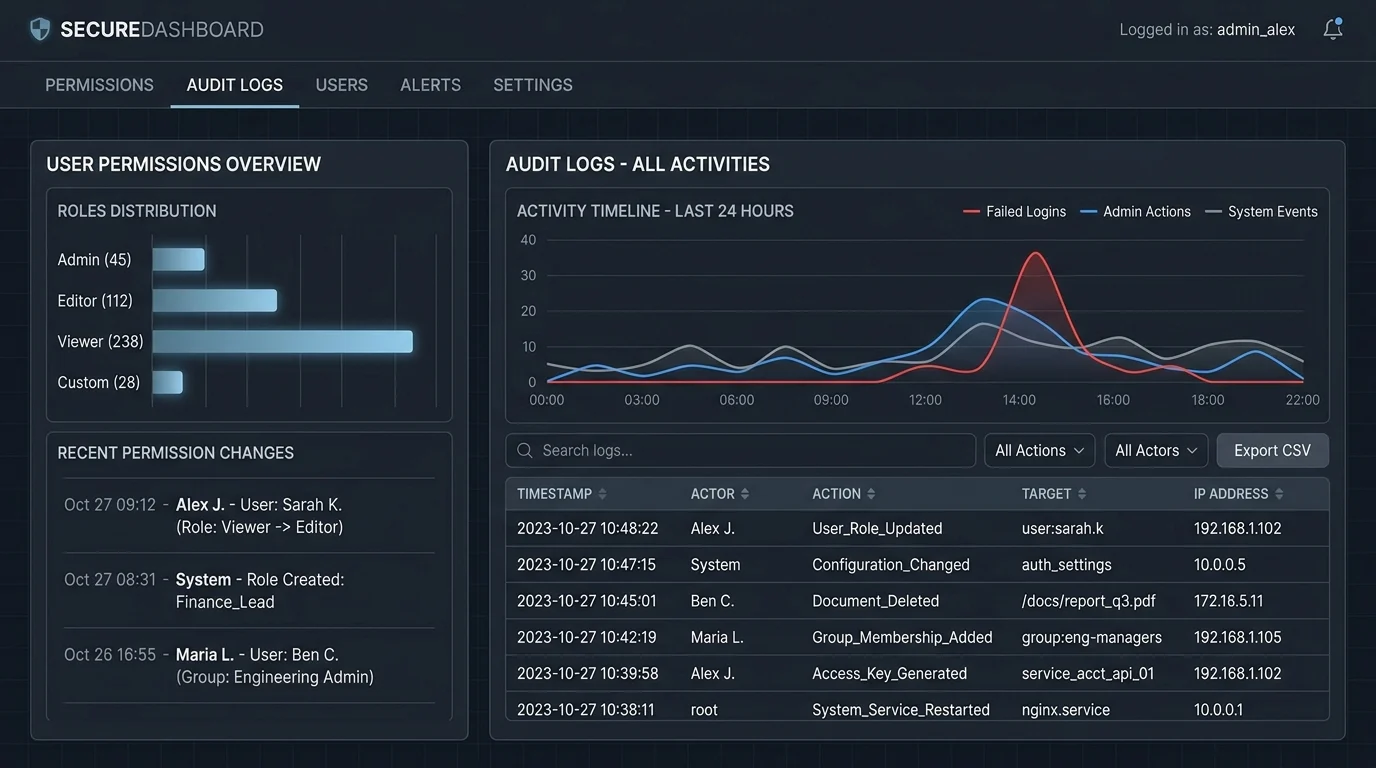
Neglecting these systems carries a heavy financial burden. As of mid-2026, the global average cost of a data breach has risen to $4.99 million. These breaches are rarely the result of sophisticated zero-day exploits alone. Records indicate that 70% of successful ransomware attacks in early 2026 originated from vulnerabilities in legacy infrastructure, such as unpatched servers and outdated VPNs. Protecting the file server requires moving beyond basic perimeter defense toward a granular identity management strategy.
Architecture and Access Control Best Practices
Effective file server management requires a disciplined architecture to avoid “permission bloat.” Organizations must implement the AGDLP (Account, Global, Domain Local, Permission) principle or similar group-based structures to maintain Microsoft best practices. This structure ensures that permissions are predictable and scalable across large environments. Administrators should specifically avoid assigning file permissions directly to individual user accounts to prevent untraceable “one-off” access rights that often remain active long after a project concludes.
The following strategies represent the modern standard for maintaining file system hygiene and preventing unauthorized lateral movement:
- Delegating access reviews to departmental “data owners” improves security by placing responsibility with those who understand the sensitivity of the information.
- Automating the user lifecycle, including immediate deprovisioning during offboarding, closes security gaps in increasingly complex hybrid environments.
- Using HTTPS-based mapped drives provides a necessary bridge for modern AI tools that cannot natively access Windows file servers due to SMB protocol restrictions.
- Continuous reporting and auditing provide the transparent overviews required for compliance with ISO 27001 and GDPR in 2026.
The Hybrid Reality of 2026
The choice is no longer between the cloud and on-premises hardware. Gartner reports that 90% of organizations have adopted a hybrid cloud approach in 2026, maintaining a mix of local and remote resources. This hybridity introduces technical friction, particularly for AI integration. Modern AI tools in 2026 cannot natively access Windows file servers without specific bridges like HTTPS-based mapped drives because of SMB protocol restrictions. Bridging this gap is essential for firms that want to leverage their proprietary data for local machine learning models without migrating entire petabytes to the cloud.
Security and compliance are now inseparable. Continuous reporting and auditing are necessary to provide transparent overviews for compliance standards like ISO 27001 and GDPR. By automating the user lifecycle and ensuring immediate deprovisioning during offboarding, IT departments can finally close the persistent security gaps that have plagued file servers for decades. Organizations that view their file servers as active, managed assets rather than forgotten silos will be the best positioned to navigate the data-intensive demands of the late 2020s.
