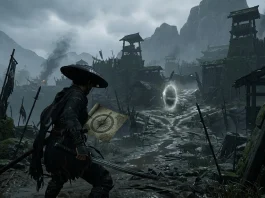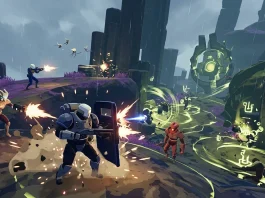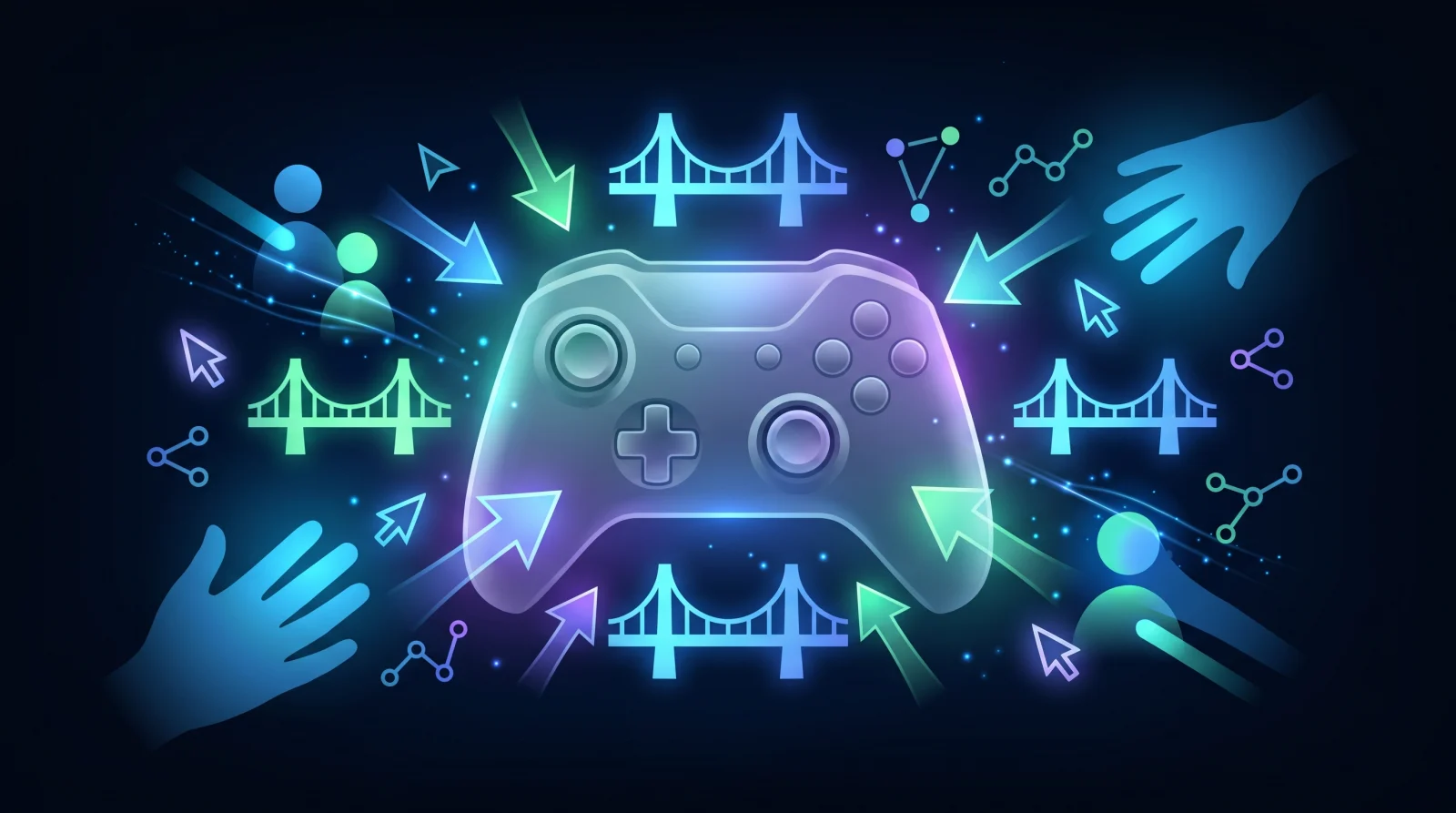
Sony has patented a system that allows spectators to interact directly with a live stream’s game world, moving the “backseat gaming” experience from the chat box into the game itself. Titled “Adaptive screen share pointer and reactions during gameplay” (US-12752199-B2), the technology aims to bridge the gap between passive viewing and active participation by allowing viewers to assist streamers who may be stuck or struggling with specific challenges.
Unlike current streaming interactions that are largely limited to text-based chat or graphical overlays, the proposed system describes a more integrated interface. In more advanced scenarios, the patent suggests spectators could even manipulate the environment, such as creating temporary bridges or moving objects within the game world to facilitate the streamer’s progress.

Physical sensation is also a core component of the proposal. The system includes a mechanism for sentiment-based reactions, where viewers can trigger specific haptic feedback in the streamer’s controller. This would allow a streamer to physically feel the audience’s response to their performance or specific in-game events, potentially indicating tension, encouragement, or warning through vibrations.
This development follows a series of recent Sony filings focused on AI-assisted gameplay and dynamic environments. Another recent Sony patent, US 2026/0295429 A1, details an AI model that could train NPCs based on player data or adapt boss difficulty in real-time. By combining these technologies, the company appears to be exploring a more dynamic ecosystem where the distinction between player and spectator is increasingly fluid.
While the technology is closely associated with the PlayStation ecosystem, the patent documents describe the system as platform-agnostic. This suggests potential compatibility across mobile devices, PC, and other console hardware, though implementation would likely rely on Sony’s proprietary cloud and social infrastructure.
The patent does not guarantee that these features will appear in a consumer product, but it outlines a technical framework for transforming “active spectatorship” into a native feature of the gaming experience. This differs from existing features like Share Play, which focuses on passing control of a game entirely to a friend, by instead allowing a crowd to influence the game world without taking over the main character’s movements.