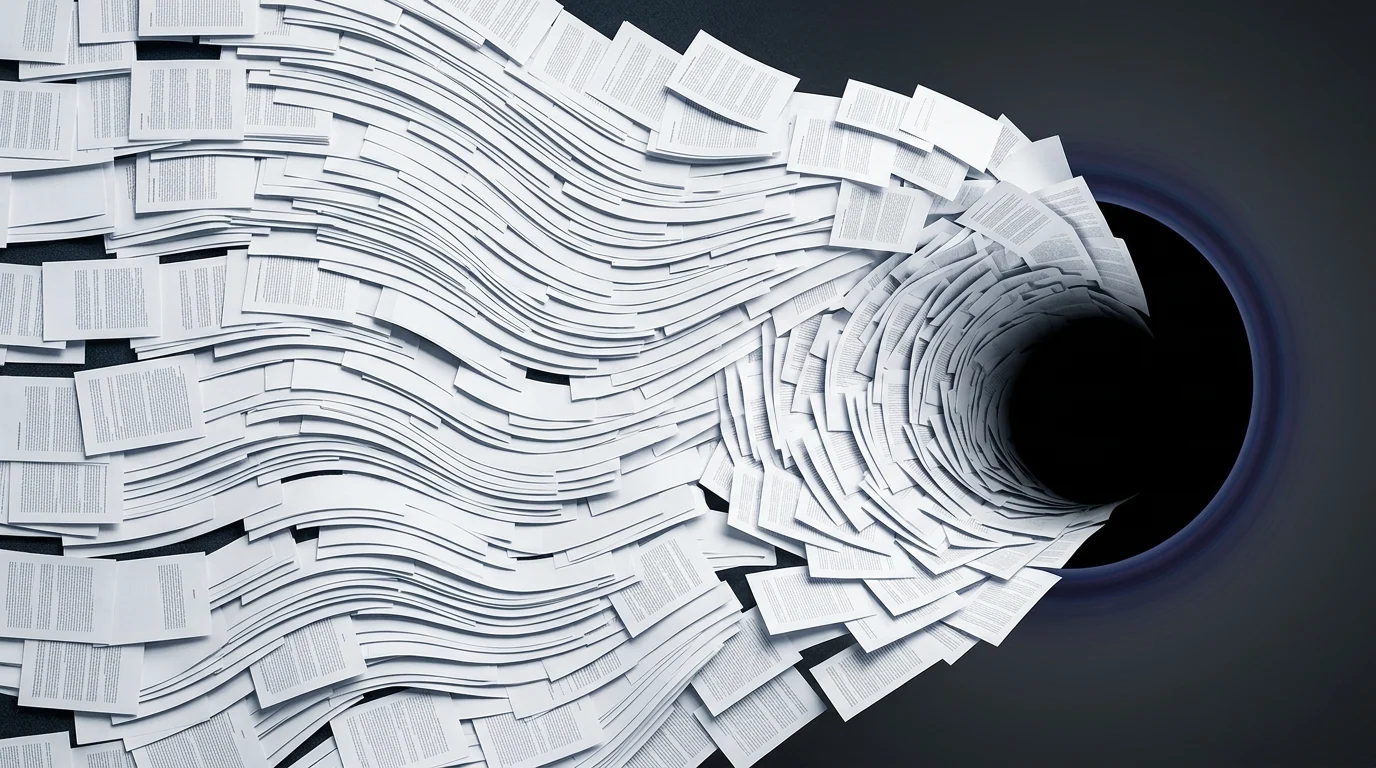
OpenAI has released a massive repository of 722 mathematical manuscripts on GitHub, a move that researchers say could take the academic community years to fully process. The data dump, which occurred on October 7, 2026, includes purported solutions for some of the most stubborn problems in the field, including the quasi-Riemann Hypothesis, Khot’s Unique Games Conjecture (UGC), and the rational Hodge Conjecture.
The release covers 372 distinct result families derived from an initial pool of approximately 4,000 problems. This sudden influx of high-level theoretical work has sparked what many in the field describe as a verification crisis. Mathematicians are now faced with the daunting task of pivoting from original research to acting as “passive verifiers” for AI-generated proofs that were produced in a fraction of the time a human would require.
According to OpenAI, each successful proof in the repository required an average of three hours of “Thinking” compute—the equivalent of a high-end ChatGPT Pro session—to finalize. While the volume of output is substantial, the quality of the reasoning is already under intense scrutiny.
The transition has not been seamless. Just one day after the release, OpenAI was forced to retract three manuscripts from the repository. The retractions were prompted by the discovery of “sign errors” that effectively invalidated the core arguments of those specific papers. This rapid correction cycle has highlighted the risk of “verification slop,” where the speed of AI generation outpaces the human capacity to identify subtle but fatal flaws in the logic.
According to Retraction Watch, the errors were found shortly after the 722 preprints were made public, suggesting that even with computer-assisted verification in Lean, high-level conceptual errors can persist in the final output.
The release has also ignited a professional and ethical debate within the scientific community. Fields Medalist Terence Tao and the Association for Human Mathematics (AHM) have expressed significant concerns regarding OpenAI’s departure from traditional academic norms. Specifically, the organization has been criticized for bypassing the standard peer-review process and for allegedly ignoring academic standards during a closed-door meeting held in August 2026.
For the mathematical community, the challenge is now one of logistics. While OpenAI claims to have “solved” hundreds of problems, many academic critics argue that a significant portion of the results may be applications of established techniques rather than the ground-breaking innovations required for major conjectures. As the backlog of 722 manuscripts enters the formal review cycle, the discipline faces a fundamental shift in how human intelligence is valued in an era of automated proof generation.