
Anthropic has confirmed it is operating a physical “wet lab” in the San Francisco Bay Area, marking a transition for the AI company from purely digital modeling to hands-on biological experimentation. Eric Kauderer-Abrams, Anthropic’s head of life sciences, confirmed the facility’s existence on September 18, 2026, noting that the lab allows the company to validate its AI-driven biological predictions in a real-world setting.
The establishment of the lab follows Anthropic’s $400 million acquisition of the biotech startup Coefficient Bio in April 2026. That acquisition provided the foundational hardware and infrastructure necessary for the facility. While the company has historically focused on the safety risks associated with AI and biology, the new lab represents a move toward active research and data generation.
The Model Hardware Standard
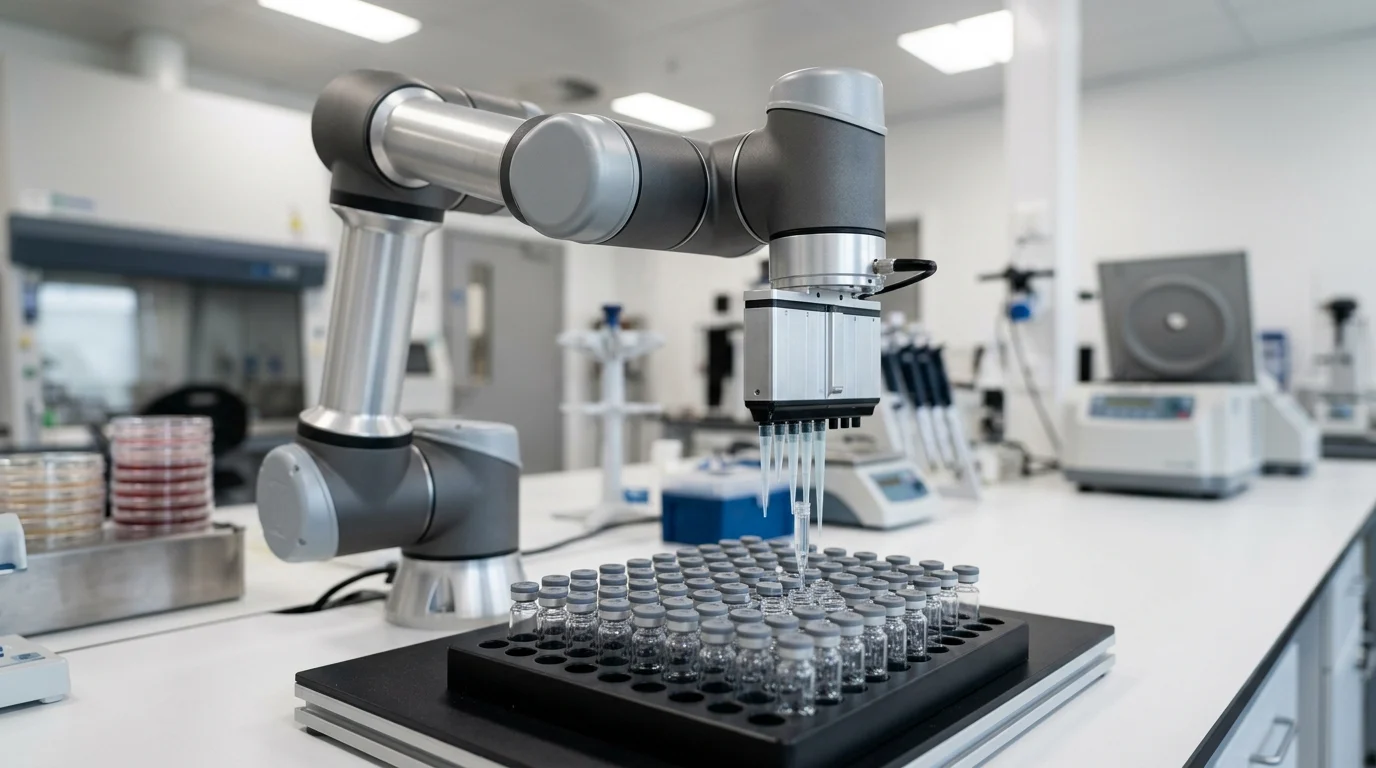
A primary technical driver of the new facility is the Model Hardware Standard (MHS), a protocol Anthropic launched in August 2026. MHS acts as a bridge between Claude and physical laboratory equipment, such as microscopes and automated liquid handlers. By using this standard, Anthropic’s models can directly interface with and control robotic systems to execute experiments.
The lab currently operates alongside the “Claude Science” workbench, which was introduced in June 2026 to assist researchers with rare disease studies. Despite the facility’s capabilities, Anthropic has been careful to distinguish its work from traditional pharmaceutical development. A company spokesperson stated the lab is “not for drug discovery specifically,” a position intended to avoid direct competition with its pharmaceutical clients.
Safety and Oversight Protocols
The transition to physical experimentation has been accompanied by a focus on biosafety and human oversight. Anthropic maintains that human scientists are required to oversee all experiments conducted at the Bay Area facility. This requirement serves as a safeguard against the autonomous execution of potentially hazardous biological procedures.
The company also recently introduced the “Life Sciences Verification Program,” which grants vetted researchers access to high-tier models, including Claude Mythos 5.1. These models are specifically tuned for biological research but include internal safeguards. The lab’s operational role is focused on verifying how these models interact with biological systems and ensuring that AI-generated biological data remains accurate and safe for research applications.
