
Meta Connect 2026, held on September 23, marked a definitive pivot in the company’s hardware strategy, moving away from the bulky headsets of previous years toward a three-tier ecosystem of smart eyewear. The event’s centerpiece was the official unveiling of “Project Phoenix,” now officially named Meta VR Glasses, a 100-gram wearable designed to bring high-end virtual reality into a standard glasses form factor.
The move represents Meta’s attempt to solve the weight and comfort issues that have historically limited VR adoption. By offloading processing power and battery life to a separate 300-gram “compute puck” tethered to the frames, Meta has reduced the weight on the wearer’s face to roughly double that of standard sunglasses. The glasses are equipped with dual 2.4K micro-OLED displays per eye and are powered by the Snapdragon Reality Elite chipset located within the puck.
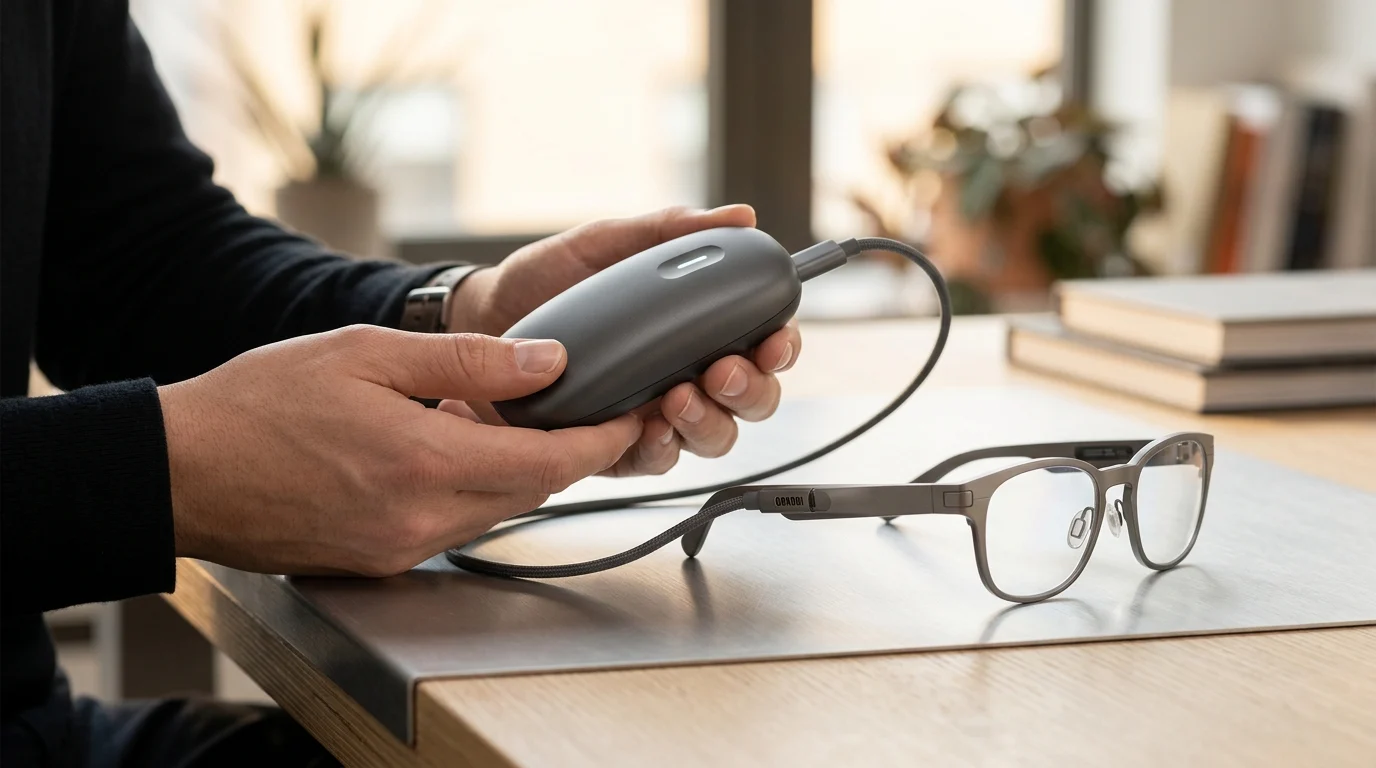
Meta confirmed that the VR Glasses will retail for $1,299.99, with shipping scheduled to begin in Spring 2027. This device sits at the top of a new hardware hierarchy that also includes significant updates to the more casual Ray-Ban Meta line.
Expanding the Ray-Ban Meta Lineup
For users who do not require full immersion, Meta introduced the Ray-Ban Meta Gen 3. Starting at $449, the third-generation smart glasses offer several hardware upgrades over their predecessors, including 3K video recording and a total of six microphones to improve spatial audio capture. The battery life has been extended to 9 hours, and the frames now support Dolby Atmos for more immersive media playback.
In a direct response to ongoing privacy concerns regarding integrated cameras, Meta also launched “Ray-Ban Meta Audio.” This $349 variant removes the camera sensors entirely, focusing exclusively on open-ear audio and AI interaction. Because it lacks a camera, the Audio model features an improved 12-hour battery life and a slimmer profile, positioning it as a competitor to high-end wireless earbuds and blue-light glasses.
The broad range of announcements at Meta Connect 2026 suggests a transition toward “ambient computing,” where digital assistants are accessible via voice and sound rather than just screens.
AI Integration and the “Hologram” Feature
Software and AI formed the connective tissue between the different hardware tiers. Meta’s personal AI agent, Muse, is now integrated across all three glasses models, allowing for real-time voice interaction and environmental analysis. For the camera-equipped models, Muse can identify objects or translate text in the wearer’s field of view.
Meta also demonstrated “Hologram,” a new communication feature for the VR Glasses and Gen 3 models. During video calls, the glasses can project a photorealistic digital avatar of the wearer to other participants, even if the wearer is currently in a mobile environment. This system uses the glasses’ onboard sensors to track facial expressions and translate them to the avatar in real time.
A Strategic Shift in Focus
Notably absent from the 2026 keynote was any mention of the “Orion” AR prototype, which had been a focal point of Meta’s long-term research in previous years. Industry analysts noted that the absence suggests a tactical shift toward productized, near-term hardware like the VR Glasses rather than the experimental silicon-carbide lenses used in the Orion research project.
While the VR Glasses are still months away from release, the expansion of the Ray-Ban line indicates Meta is prioritizing immediate market presence.
