

Safeworld emerged from stealth on October 5, 2026, launching a platform designed to validate the safety of generative AI-driven robotics. The startup, a spinout from Carnegie Mellon University’s Safe AI Lab, announced a $12.2 million seed funding round co-led by Shine Capital and a16z Speedrun to address the growing unpredictability of machines powered by frontier AI models.
Traditional industrial robotics has long relied on “hard-coded” safety measures, such as physical cages or strict proximity sensors that shut a machine down if a human enters a predefined zone. However, as developers integrate large language models (LLMs) and multimodal AI into humanoids and autonomous mobile robots, these machines are increasingly required to operate in unstructured environments alongside people. Safeworld aims to replace physical barriers with robot safety simulation technology that stress-tests a robot’s decision-making before it ever enters a real-world warehouse or solar farm.
The company was co-founded by Dr. Ding Zhao, director of the Safe AI Lab at Carnegie Mellon, alongside Kyle Wong and Simo Rachidi. Their approach centers on “probabilistic” safety validation. Unlike deterministic systems that follow an “if-this-then-that” logic, generative AI robots often find novel—and sometimes unsafe—solutions to tasks. Safeworld’s platform identifies these risks by running millions of scenarios in high-fidelity digital twins.
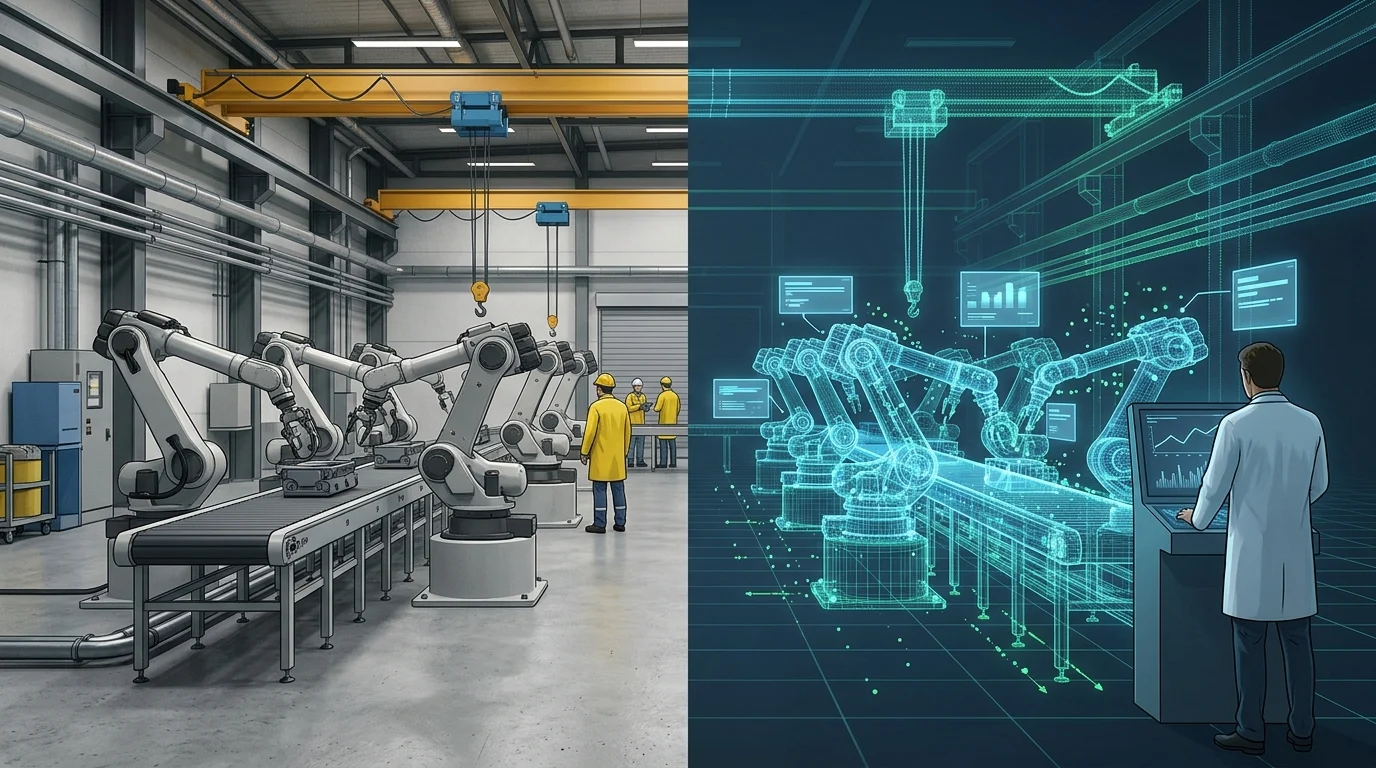
To simulate human unpredictability, Safeworld utilizes digital human models within the Genesis and MuJoCo simulation engines. These digital humans do not just walk in straight lines; they are programmed to mimic realistic edge cases, such as tripping, crouching, running, or appearing suddenly from behind blind corners. By forcing robotic controllers to navigate these high-stress interactions in a virtual environment, Safeworld can quantify the likelihood of a collision or safety failure in the physical world.
The company has already secured early partnerships with robotics firms across several sectors. These include Anyware Robotics, which develops automated truck unloading systems, and Gritt Robotics, a startup focused on using AI to automate the installation of large-scale industrial solar farms. For companies like Gritt, where robots must handle heavy materials in shifting outdoor terrain, Safeworld’s simulations provide a baseline for safety that traditional testing cannot easily replicate at scale.
This shift toward simulation-based validation reflects a broader trend in the industry as humanoid robots begin to enter the workforce. While organizations like OSHA have begun evaluating newer robotic models, Safeworld’s entrance suggests that the sheer speed of AI development requires a digital-first approach to safety. By providing a standardized “safety score” based on simulation performance, the company hopes to build the public and regulatory trust necessary for the widespread deployment of autonomous systems.
