
Google’s Noto 3D emoji library features nearly 4,000 redesigned characters. This move marks a significant shift in Google’s design philosophy, prioritizing “soul” and emotional clarity over anatomical accuracy or photorealism.
The updated library includes 3,977 emoji characters that have been converted into true 3D models. To support community development and cross-platform consistency, Google has released the entire set as open-source .OBJ files. While these 3D versions are now arriving as a post-launch update, they were notably absent from the initial release.
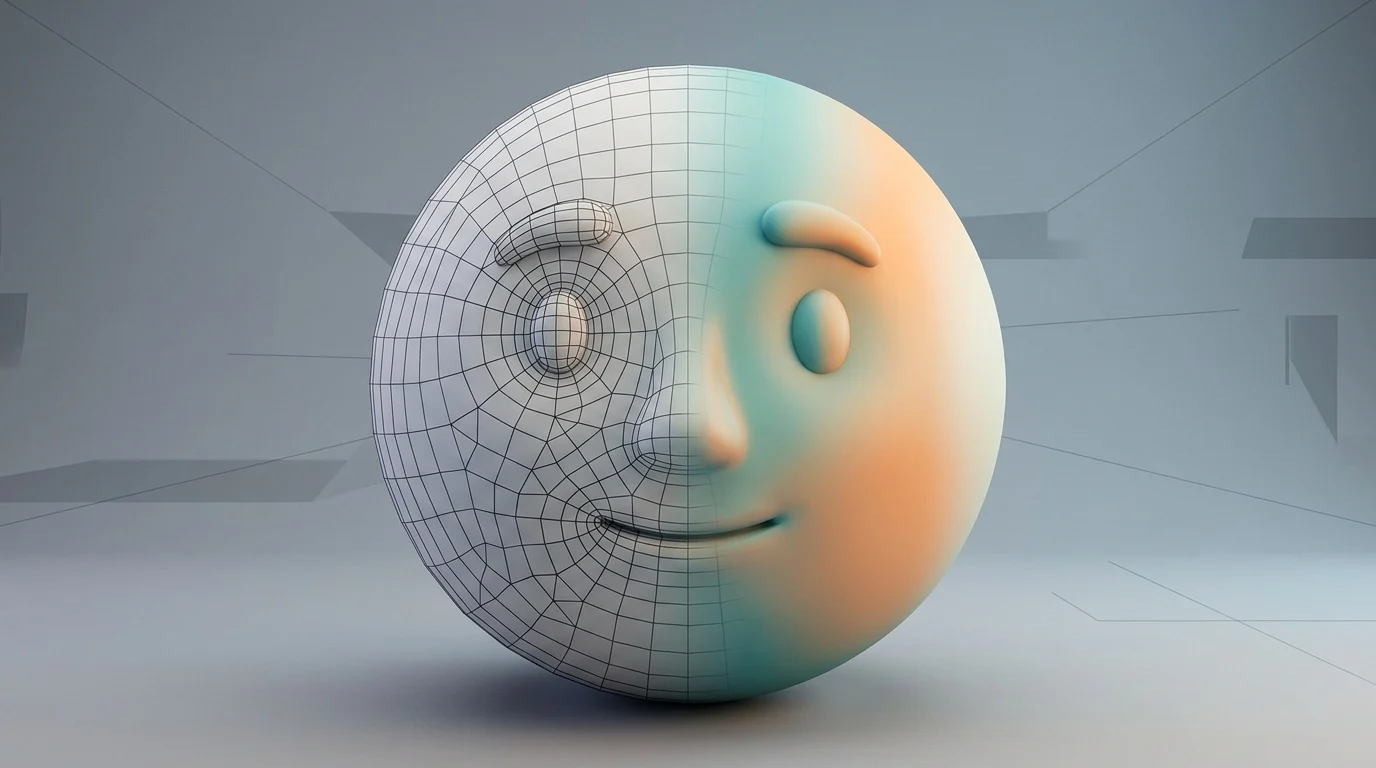
The ‘Rule of Three’ and Small-Scale Design
Designing for mobile screens requires extreme optimization, as emoji often appear at resolutions as low as 18×18 pixels. To maintain legibility, Google designers employed what they call the “Rule of Three.” This internal guideline dictates that each emoji should contain no more than three iconographic details to communicate its primary meaning. By stripping away extraneous textures and complex lighting, the team ensured that icons remain recognizable even when shrunk to the size of a standard text character.
This philosophy led to the rejection of photorealism. During development, the design team encountered the “Kangaroo Problem” and “Poodle Legs” anecdotes—instances where following anatomical reality resulted in 3D models that looked awkward or unreadable at small sizes. Instead, the team opted for an illustrative style that emphasizes “personality” and exaggerated features to convey intent more effectively than a realistic render could.
