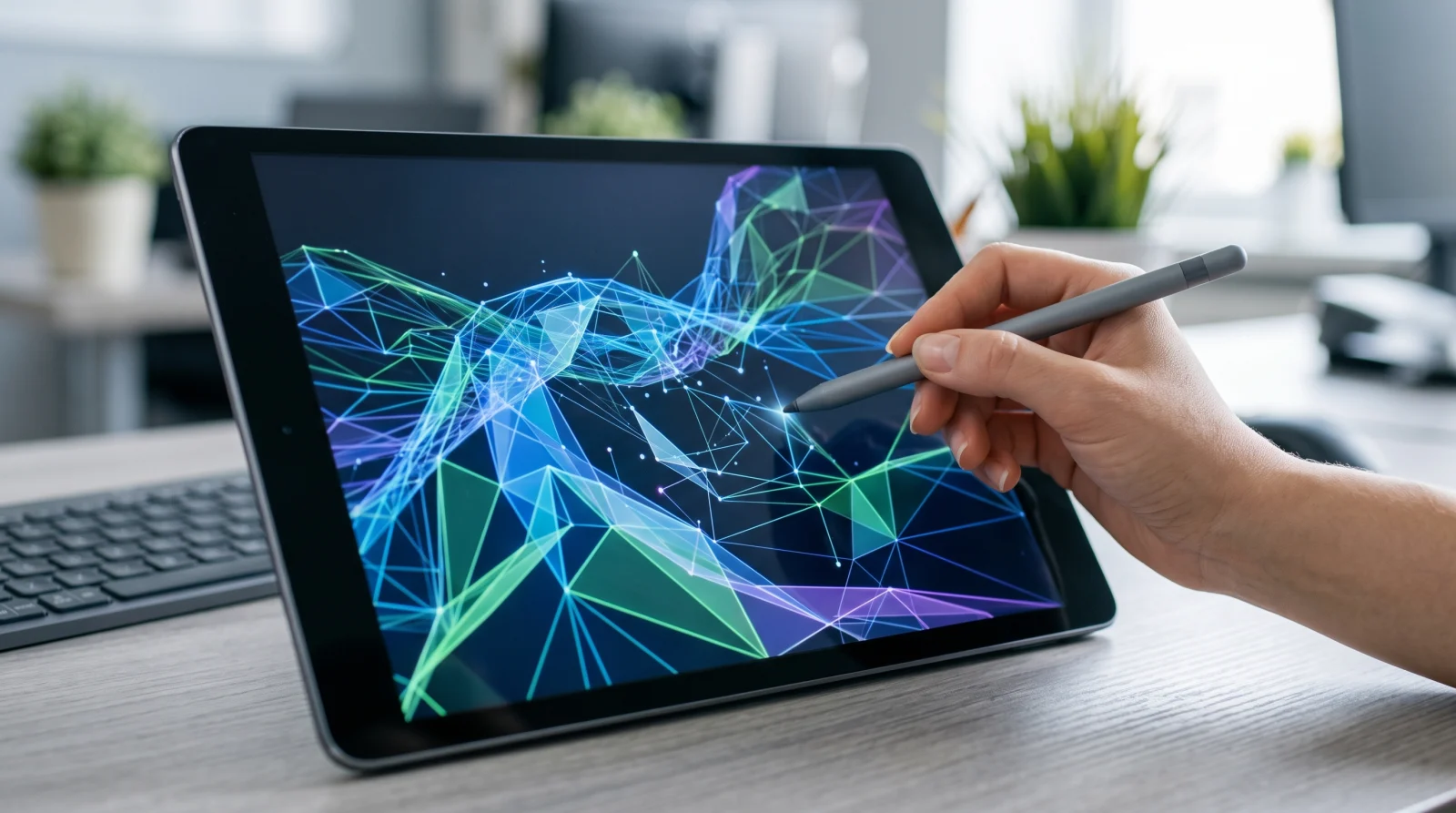
The Blender Foundation is working on an official release of Blender on Android tablets. The foundation confirmed that development for an iPad version remains on an indefinite hold.
The divergence between the two mobile platforms stems from a combination of technical readiness and deep-seated licensing conflicts. While Android’s open ecosystem allows the foundation to navigate its specific software requirements, the iPad version faces a “double-bind” of missing dedicated funding and a fundamental incompatibility between the Apple App Store and the GNU General Public License (GPL) that governs Blender’s source code.

The Technical Shift to Vulkan
The primary catalyst for the Android port is the software’s recent transition to the Vulkan graphics API. Completed during the development of Blender 4.5 and 5.x, this move replaced older OpenGL requirements with a modern standard that aligns with mobile hardware. Vulkan allows Blender to communicate directly with the GPUs found in high-end mobile chipsets, providing the performance necessary for complex 3D viewports and EEVEE rendering.
According to development reports, the Android port is not a “lite” version of the software but a full adaptation. Developers are currently testing Blender on Android tablets to refine the interface for mobile hardware, which is critical for professional production workflows.
Why Android Leads Over iPad
The decision to prioritize Android over iPadOS is largely strategic. Because Blender is Free and Open Source Software (FOSS), it is distributed under the GPL. Apple’s App Store Terms of Service include restrictions—such as prohibiting the redistribution of software—that many legal experts and FOSS advocates argue are incompatible with the GPL’s “copyleft” requirements. On Android, the Foundation can bypass these restrictions by offering the software through alternative stores or direct APK downloads that honor the original license.
Furthermore, the iPad project lacks a dedicated funding stream. While the Android port has benefited from hardware partnerships and community-driven development aimed at making Android a “desktop-class” production platform, the iPad version requires significant capital to resolve both the licensing hurdles and the platform-specific code adjustments needed for Apple’s proprietary Metal API.
Hardware Requirements and Optimization
The development team is currently seeking hardware data from users to help optimize the suite for mobile devices. Current testing focuses on ensuring the software maintains stability on mobile silicon to provide the performance required for 3D tasks.
For now, the project remains in a development phase. The software has not yet been released for general public use as the team works on the interface for mobile screens and ensures file compatibility with the desktop version of Blender 5.x.