
Tesla’s vision for a driverless future arrived on the streets of Austin, Texas, on September 3, 2026, as the company officially launched paid public rides for its Cybercab robotaxi. The two-seater vehicle represents a radical departure from conventional automotive design, operating entirely without a steering wheel, pedals, or side mirrors.
The cabin is designed around a central infotainment screen and two deeply bolstered seats, providing a passenger-first experience that feels more like a mobile lounge than a car. While the interior eliminates nearly all traditional tactile controls, the software handles every aspect of navigation and vehicle operation through Tesla’s Vision-only hardware suite.
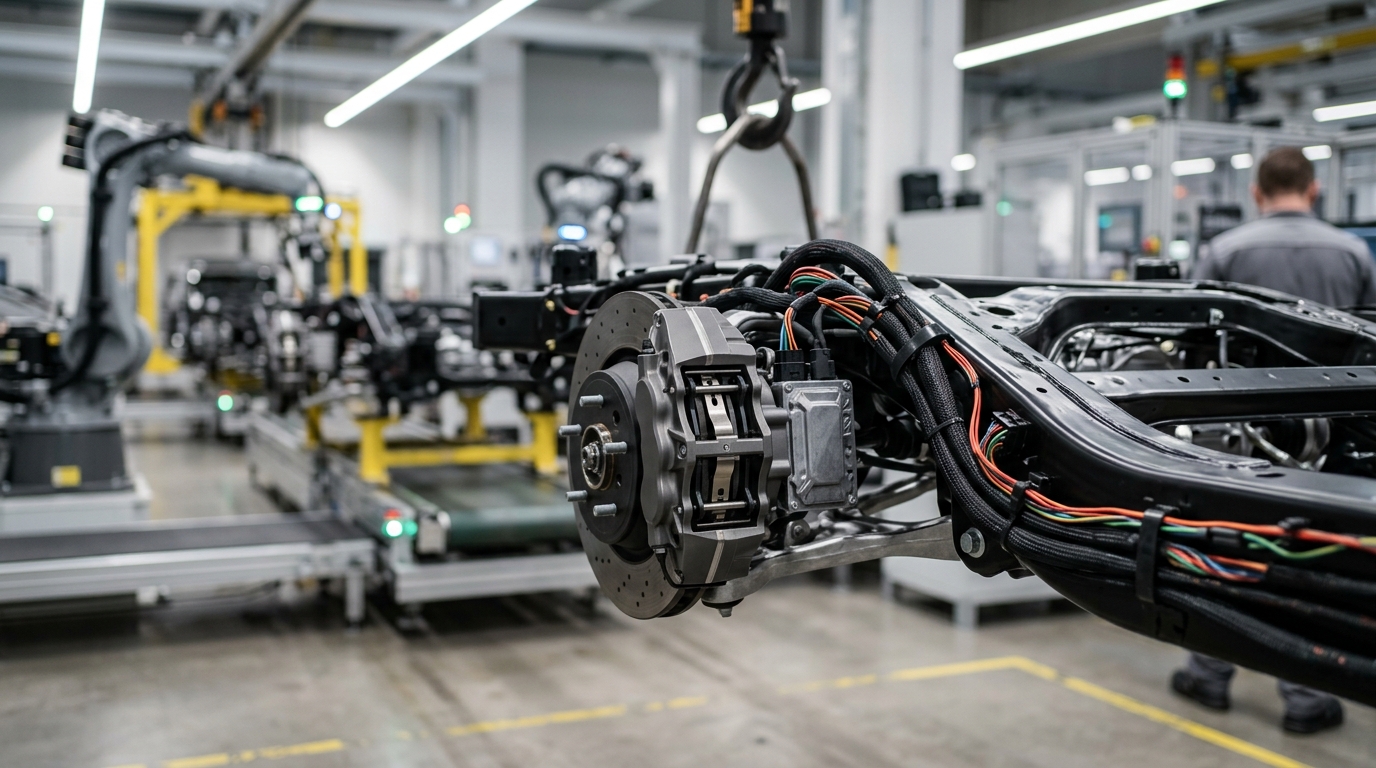
The launch comes alongside significant technical milestones. The Cybercab features a 47.6 kWh lithium-ion battery pack and has achieved a certified EPA efficiency rating of 6.1 miles per kWh—making it the most efficient production electric vehicle to date. This efficiency enables an estimated range of 293 miles despite the relatively small battery size. Tesla has also implemented an electro-mechanical “dry” brake-by-wire system, which removes the need for hydraulic fluid and traditional brake lines, streamlining the mechanical complexity of the chassis.
However, the technical rollout has immediately met regulatory resistance. On the same day public rides began in Austin, the National Highway Traffic Safety Administration (NHTSA) opened Audit Query AQ26002. The investigation focuses on Tesla’s self-certification of a vehicle that lacks traditional manual controls. While competitors like Zoox and Waymo have generally sought federal exemptions for non-traditional vehicle designs, Tesla has moved forward by asserting the Cybercab meets safety standards through its own internal validation.
The Cybercab’s design also introduces new infrastructure requirements. The vehicle is equipped exclusively for inductive charging; it lacks a physical plug port or an onboard AC charger. This means the car cannot be plugged into a standard wall outlet or a typical Level 2 charging station. It is currently locked into a proprietary ecosystem of wireless charging pads, a configuration that favors fleet operators over individual owners who might want to charge in a standard garage.
According to statements from Elon Musk, Tesla aims to keep the manufacturing cost of the vehicle under $30,000. The company claims its “unboxed” manufacturing process—which treats the car as sub-assemblies that are only joined at the final stage—will eventually allow for production speeds five times faster than traditional assembly lines.
Despite the ongoing federal audit and the unique charging limitations, Musk confirmed that Tesla remains on track for the first consumer deliveries of the Cybercab before the end of 2026. For now, the Austin deployment serves as a live-market test for how the public—and federal regulators—interact with a vehicle that has fundamentally removed the human driver from the equation.
