
Tesla recently demonstrated a second-generation Roadster prototype capable of mid-air maneuvers, but the spectacle at SpaceX’s McGregor facility came alongside news of a further production delay. During the October 15, 2026, event near Waco, Texas, the vehicle performed a “kickflip” stunt—driving up a vertical curved ramp, launching into a mid-air rotation, and landing using cold-gas thrusters. However, CEO Elon Musk confirmed that production is now targeted for 2028, roughly 11 years after the car’s initial reveal.
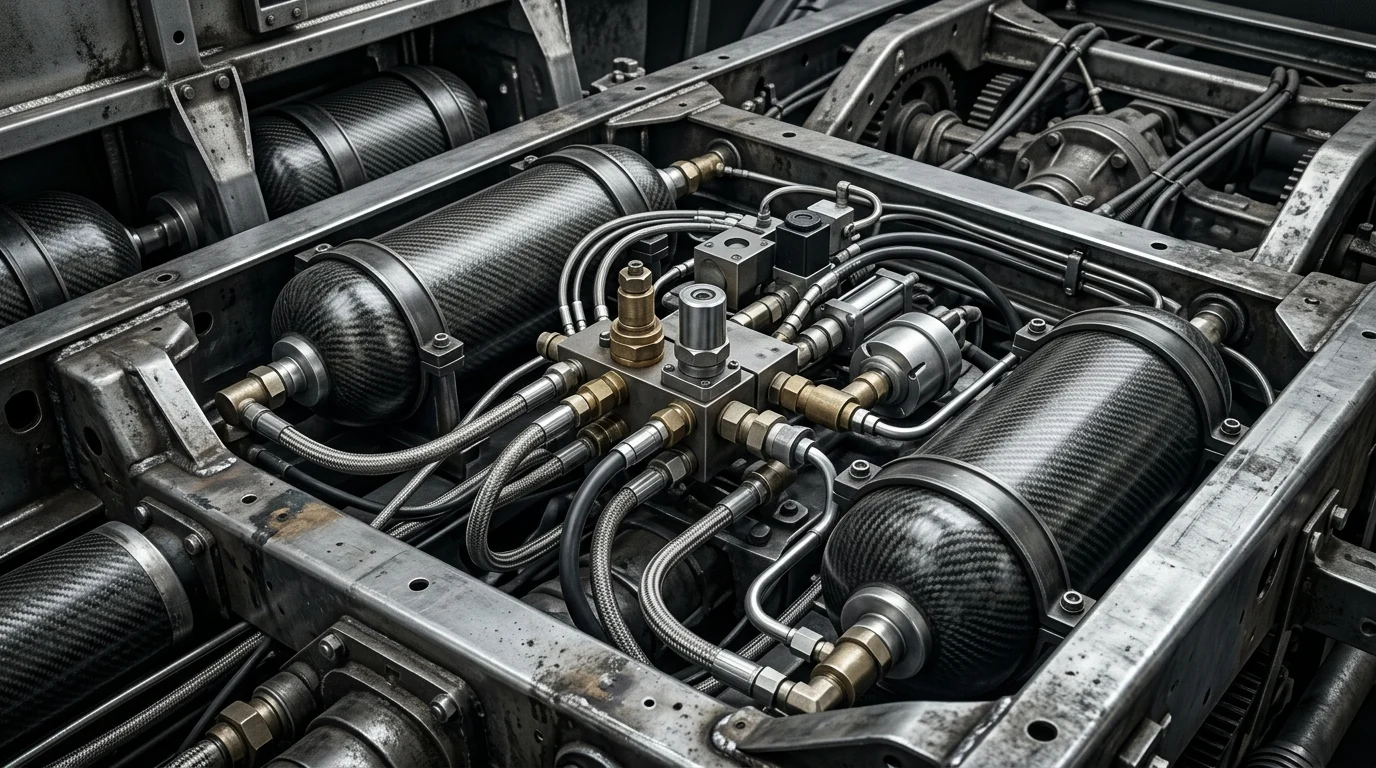
The demonstration featured an uncrewed, remote-operated prototype to showcase two distinct technologies: a multi-mode suction system and SpaceX-derived thrusters. To maintain grip on the vertical ramp before launch, the vehicle utilized high-powered vacuum fans to generate artificial downforce. Once airborne, the car stabilized its rotation using 10 nozzles fed by 600 liters of compressed air stored in carbon-fiber overwrapped pressure vessels (COPVs). An on-board compressor re-pressurizes the system for subsequent use.
Three Tiers of Performance
Tesla plans to offer the Roadster in three hardware configurations, though only the base model is expected to be a traditional road car. The Performance trim utilizes the vacuum suction system for enhanced cornering and braking. The mid-tier Thrust version adds rear-facing cold-gas thrusters to improve straight-line acceleration. During the demonstration, the vehicle achieved a 0-60 mph time of 0.81 seconds.
The top-tier Rocket trim, which features the full perimeter thruster system used in the Texas demonstration, is a single-seat model designed for maximum performance. Musk noted that this specific variant is not approved for public roads and “might not be legal in all jurisdictions.” The Rocket trim removes the passenger seat entirely to accommodate the necessary pneumatic hardware.
Revised Specifications and Market Reality
The technical specifications for the production-intent Roadster have shifted significantly since its 2017 debut. Musk reported that the production version could target top speeds of Mach 0.5, or approximately 383 mph, though this remains an unverified performance claim.
The financial market responded positively to the demonstration, with Tesla stock rising 5.4% in premarket trading following the McGregor event. Nevertheless, the path to a consumer release remains long for a vehicle that has seen its production timeline slip repeatedly over the last decade. With the 2028 target now set, the “flying” capabilities demonstrated in Texas appear positioned more as a halo engineering achievement for the brand than a feature for the average commuter.
