
Anthropic’s internal workforce is undergoing a fundamental shift as artificial intelligence agents increasingly handle execution tasks once assigned to junior staff. According to a report released by the company on October 16, 2026, titled “How employment is changing at Anthropic,” the firm has drastically reduced its intake of entry-level employees while existing staff spend significantly more time in coordination and meetings.
The report details a transition from human-led execution to human-led supervision. As AI agents take over the bulk of technical production, the role of the human employee has evolved into a “meta-worker,” focusing on monitoring agent pipelines and establishing visibility tools for automated systems.
The Decline of Junior Technical Roles
The most visible change in Anthropic’s organizational structure is the plummeting share of entry-level talent. Over the last year, junior technical hiring fell from 27% to just 9% of all technical hires. Within technical departments specifically, the total share of junior employees dropped from 21% to 14% since early 2025.
This shift corresponds with a change in how the company evaluates new talent. Hiring manager scorecards now prioritize “autonomy and judgment” over traditional execution skills or deep domain expertise. This suggests that the company is looking for “architects” who can direct AI agents rather than “builders” who write code or perform research tasks manually.

The Paradox of More AI and More Meetings
While AI agents have increased the company’s total output, they have not reduced the human workload in terms of time spent. Instead, they have shifted it toward management and coordination. The report found that the median Anthropic employee now spends 20% more time in meetings than they did one year ago. Technical individual contributors—those typically expected to spend the most time on focused coding or research—saw a 16% increase in meeting time.
Much of this increase is attributed to “meta-work,” which includes writing detailed instructions for agents and monitoring their outputs. This type of activity now accounts for 22% of average interactive sessions with Claude, Anthropic’s flagship AI, up from just 10% in the previous year.
The rise in meetings is also driven by the need to resolve “procedural overhead” created by the sheer volume of work AI agents produce. Despite their speed, these agents currently spend approximately 80% of their session time idle, waiting for a human user to provide the next instruction or confirm a result.
The 6-to-1 Agent Work Ratio
Anthropic reached a significant milestone in early 2026 regarding its internal operations. March 2026 marked the first month that AI agent work hours officially surpassed human work hours at the company.
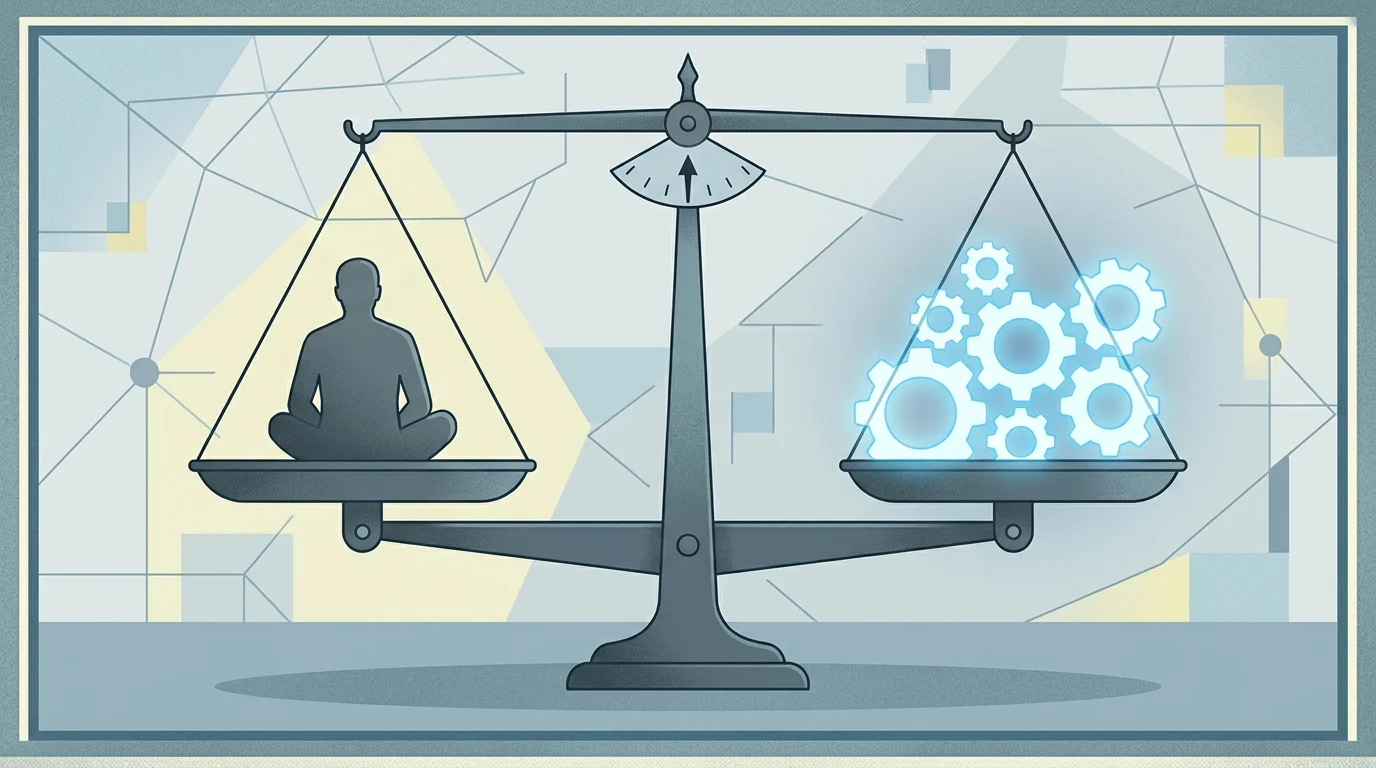
By August 2026, that gap had widened significantly. AI agents supervised by employees logged six times as many working hours as the humans directing them. This high ratio of machine-to-human labor has forced leadership to refocus on the human elements of the business that cannot be automated. CEO Dario Amodei reported that maintaining company culture and internal alignment now occupies approximately 40% of his personal schedule.
