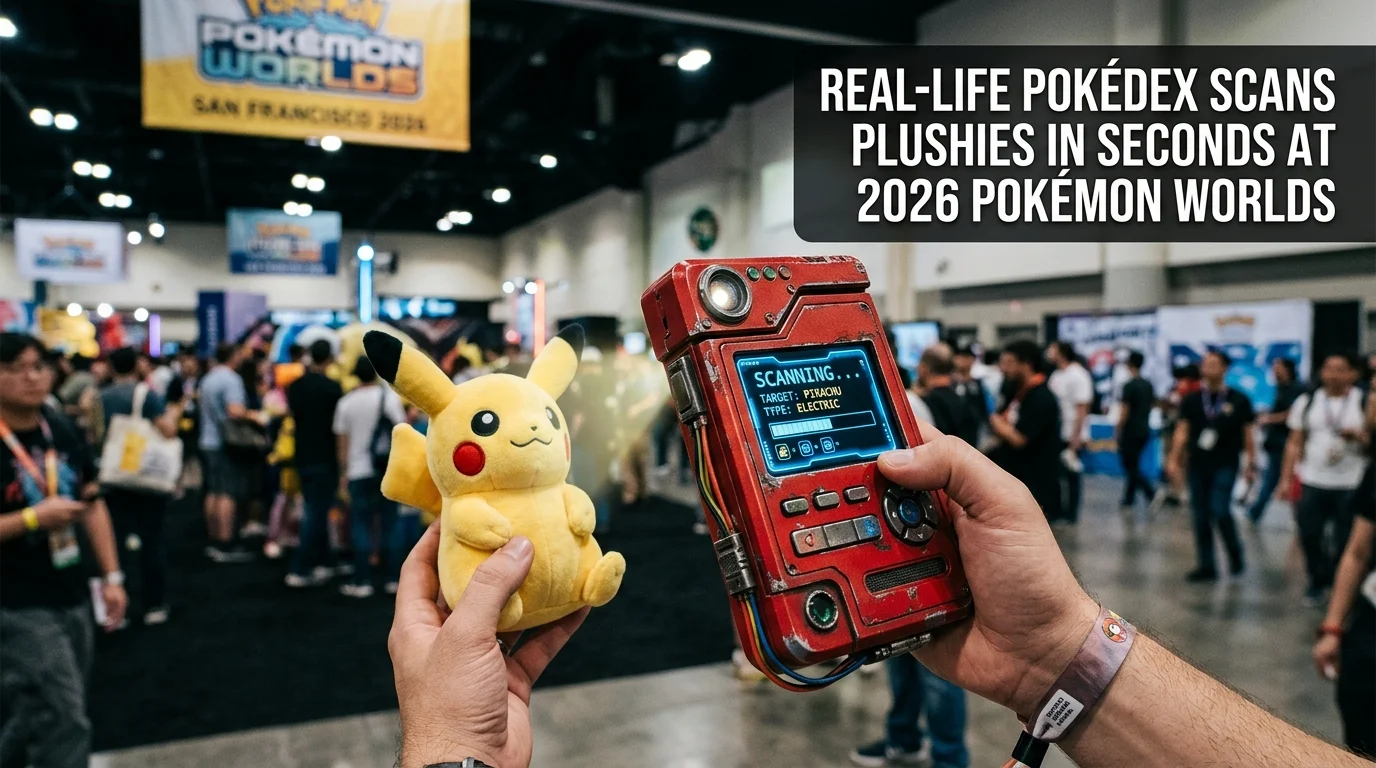
- Functional Hardware: A custom-built, real-life Pokédex debuted at the Pokémon XP fan experience during the 2026 Pokémon World Championships in San Francisco.
- Technical Architecture: The unit utilizes a Raspberry Pi Compute Module 4 and computer vision to identify plushies and cards in real-time.
The Pocket Monster Dream Becomes Reality in San Francisco
We watched the crowds swarm around the Pokémon XP fan experience in San Francisco, and it wasn’t for a rare digital download. Instead, the focus was a palm-sized piece of red plastic that actually does what the anime promised decades ago. A fully functional, real-life Pokédex made its debut at the 2026 Pokémon World Championships, and the reaction was instantaneous. This isn’t just a plastic shell or a smartphone case. It is a dedicated piece of engineering that identifies physical objects and recites their data with that iconic, slightly nasal robotic cadence.
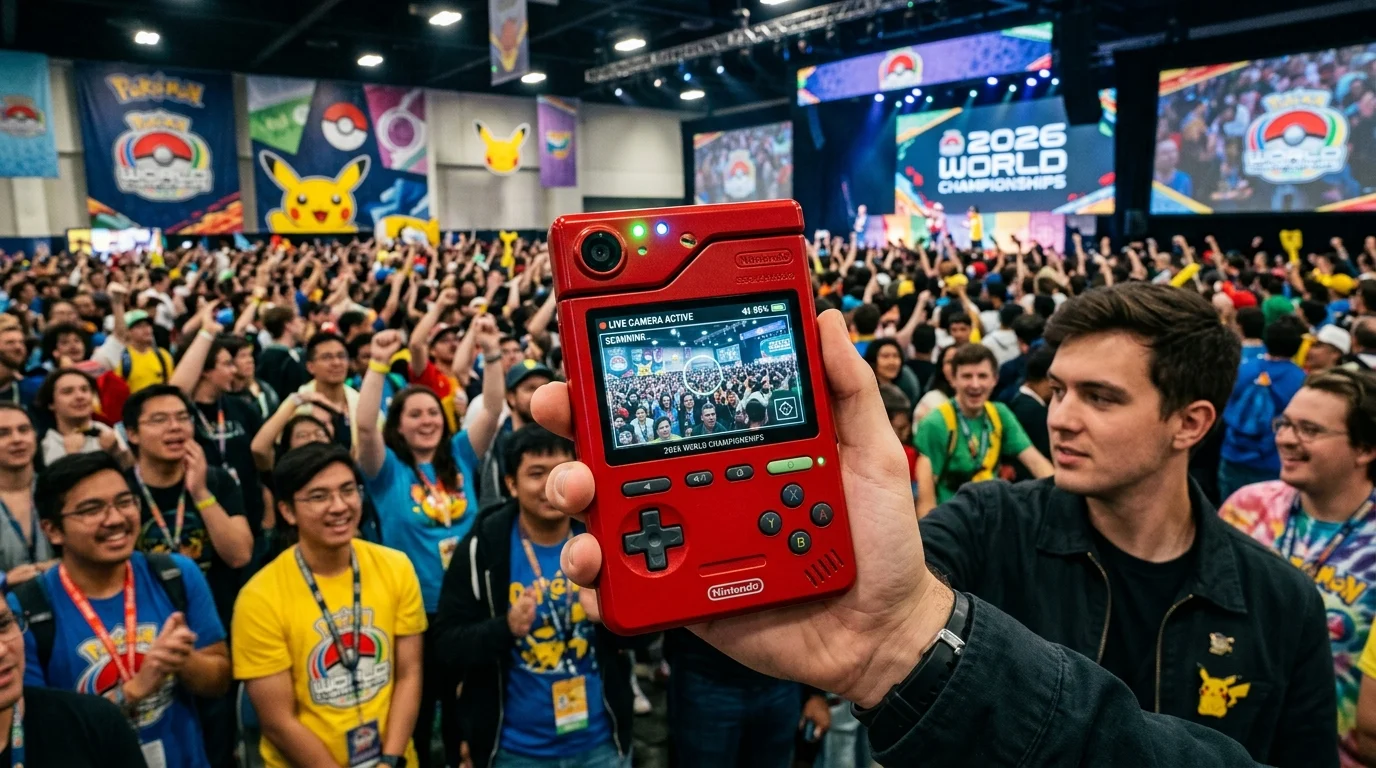
Our team looked into the collaboration behind the device, which brought together two heavyweights in the maker community. Content creator BigRig Creates handled the software side of the equation, while the hardware design was spearheaded by Mr. Volt. The result of their partnership is a device that feels less like a toy and more like a legitimate piece of field equipment. It doesn’t just sit there; it scans, processes, and speaks. When it identified a Heatmor plush during a live demonstration, the video of the interaction exploded, racking up over 290,000 views in just 24 hours.
Under the Hood: How the Real-Life Pokédex Thinks
The hardware inside is where things get interesting for the tech-obsessed. Rather than relying on a simple smartphone app, the creators opted for a more robust industrial solution. The heart of the Pokédex is a Compute Module 4, which manages the high-level tasks like the user interface and the camera feed. To handle the more granular system tasks, they integrated an ESP32 and a Raspberry Pi Pico. This tiered architecture ensures that the device remains responsive while the computer vision algorithms are hard at work.
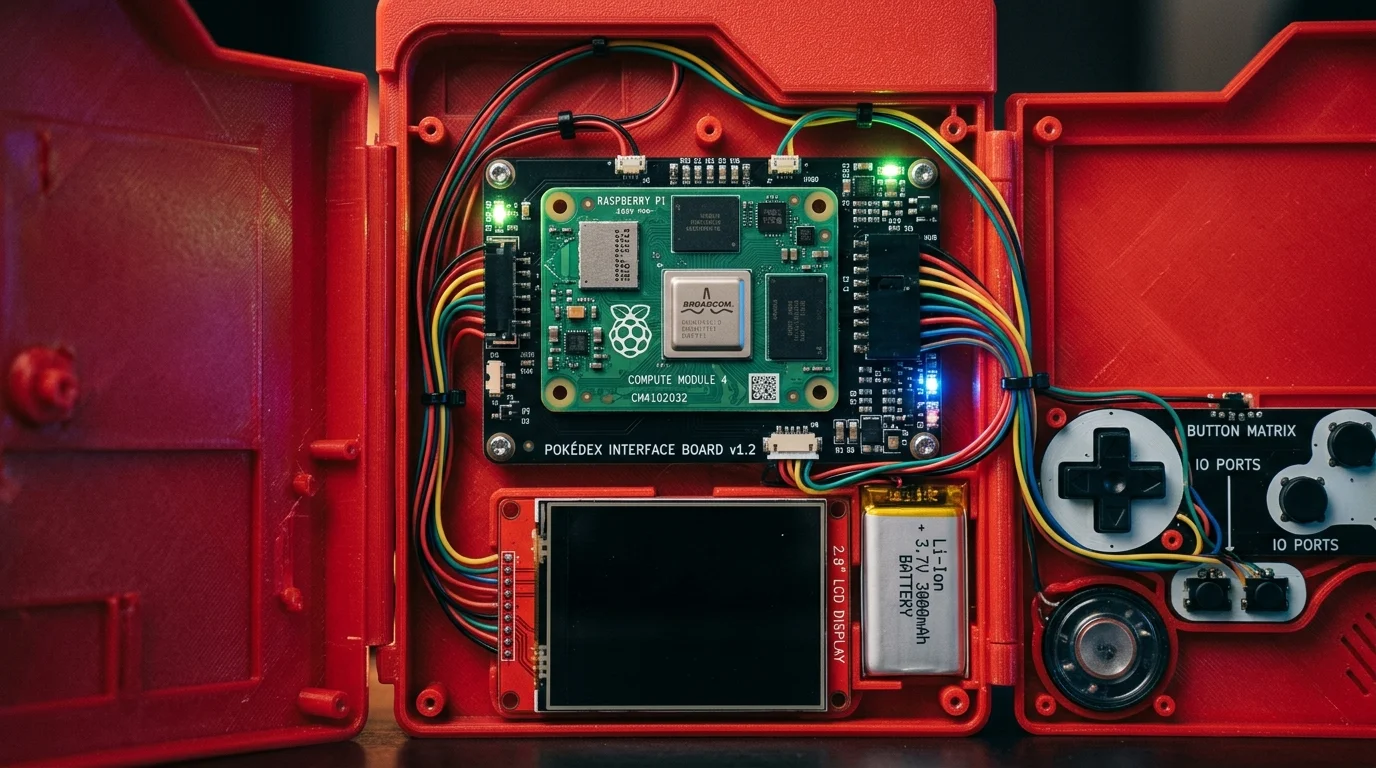
The identification process uses advanced computer vision to recognize a variety of items. We found that the software is versatile enough to pick up Pokémon plushies, trading cards, and even hand-drawn sketches. Once the camera locks onto a target, it queries a built-in Pokémon database to pull up-to-date stats and lore, displaying the info on sharp internal screens while the voice module reads the description aloud. This level of hardware integration is detailed in the ESP32 datasheet, which outlines how these microcontrollers handle the complex I/O required for such a responsive device.
| Component | Specification / Function |
| Main Logic Unit | Raspberry Pi Compute Module 4 |
| Secondary Controllers | ESP32 & Raspberry Pi Pico |
| Recognition Engine | Custom Computer Vision (CV) |
| Compatible Media | Plushies, TCG Cards, Drawings |
| Debut Location | 2026 Pokémon World Championships |
A Viral Moment for Fan Engineering
The internet’s obsession with the device stems from its accuracy. In the viral clip that dominated social feeds, the Pokédex was pointed at a Heatmor—a relatively niche Gen V Fire-type. It didn’t stutter. Within seconds, the screen flashed with the correct entry and the voice confirmed the identity to the cheering crowd. This wasn’t a scripted sequence; it was a demonstration of how far hobbyist hardware and AI-driven vision have come. The project is a perfect example that the gap between fictional gadgets and consumer-grade reality is shrinking fast.